STAKEHOLDER TRUST • SEPTEMBER 2026
When People Don't Understand the Why, They Create Their Own Why
When leaders leave an information vacuum, stakeholders fill it with assumptions. Those assumptions become narratives—and those narratives can become opposition and business risk.
By Caryn Whitney • Founder & Principal Advisor, Whitney Advisory Group
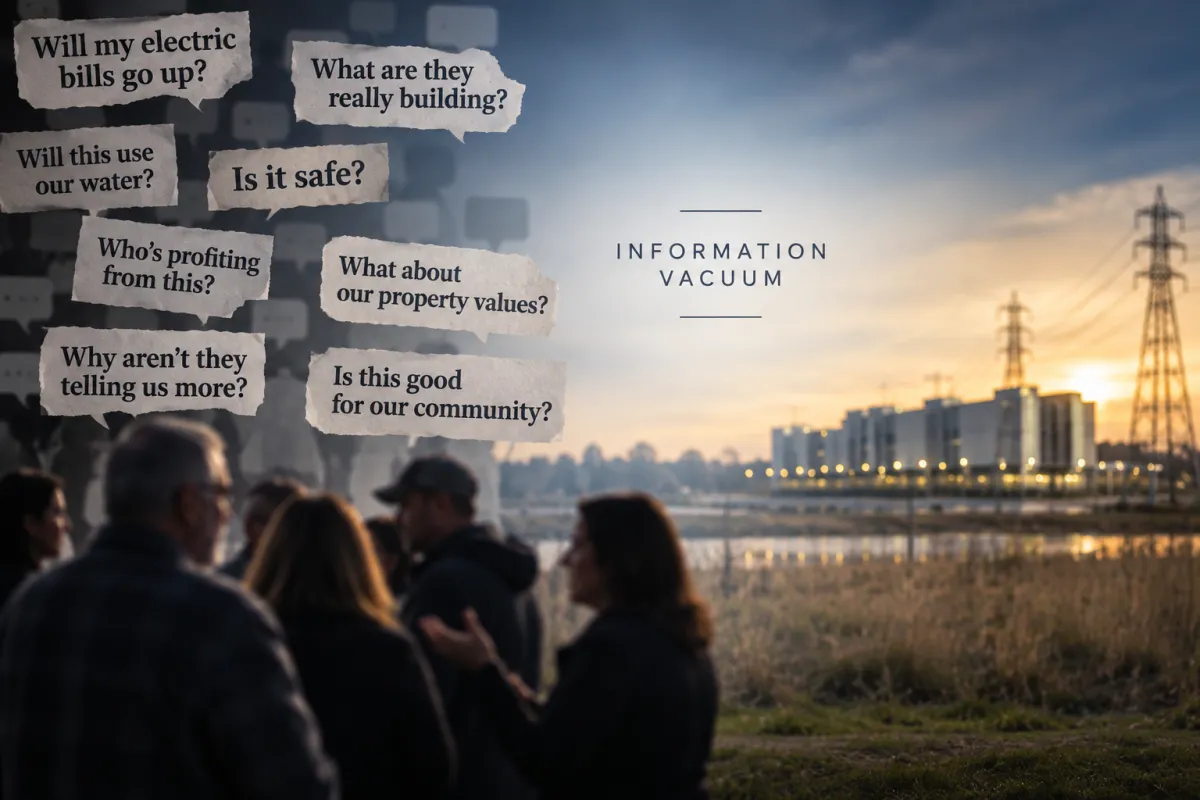
When people don't understand the why, they create their own why.
When leaders leave an information vacuum, stakeholders fill it with assumptions. Those assumptions become narratives. Narratives can become opposition. And opposition can become business risk.
The challenge is especially acute across energy and critical infrastructure, where decisions are becoming more complex, more visible and more consequential. Electricity demand is rising. Infrastructure is expanding. Costs are increasing. And communities are asking harder questions about what these changes mean for them.
For electric cooperatives and utilities, that may mean explaining why rates are rising, how new load will affect the system, or why major investments in generation, transmission and distribution are necessary. If leaders don’t explain the why clearly and early, members and customers will create their own explanations—and those explanations may be far more damaging than the facts.
Data centers offer a particularly visible example. Communities are asking questions about electricity use, water, noise, land, tax incentives and whether local residents will ultimately bear the costs. Those concerns cannot be dismissed as resistance to progress. They are signals that stakeholders want to understand the tradeoffs—and whether leaders have considered their interests alongside the opportunity.
The opportunity is real. So is the responsibility to communicate it well. The strongest leaders do not wait until opposition forms to begin explaining a project. They communicate early, acknowledge legitimate concerns, provide evidence and create a clear narrative around both the benefits and the tradeoffs.
Advanced nuclear has an opportunity to learn from what is happening around data centers. In many ways, nuclear is still waiting on the sidelines for its play to be called as the country confronts enormous growth in electricity demand. As projects move from promise toward deployment, developers should not wait until siting, permitting or construction to begin building understanding and trust.
That means being transparent about what the technology can—and cannot—do. Explain the need it is intended to meet. Address questions about safety, cost, reliability and community impact before others define those issues for you. Build relationships with elected officials, community leaders and other stakeholders before you need their support.
Trust is not built by telling stakeholders what to think. It is built by helping them understand enough to reach an informed conclusion—and by demonstrating through actions that their questions and concerns were taken seriously.
The best time to earn trust is before you need it. Before the rate increase. Before the public hearing. Before the first shovel hits the ground. Before a project becomes controversial. Before an important decision becomes a business risk.
Because when people understand the why, leaders have a far better chance of earning the trust required to move forward.
Quick Links
Legal & Compliance
The EarnTrust™ Framework
© 2026 Whitney Advisory Group LLC. All Rights Reserved.
EarnTrust™ is a trademark of Whitney Advisory Group LLC.